Growing Up Irish in the 80s & 90s – The Things Only We Understand
Growing up in Ireland in the 80s and 90s was full of moments only Irish people understand—from Tayto sandwiches to hurling in the street and The Den on RTÉ.
IRISH HUMOUR & SAYINGSIRISH HERITAGE & DIASPORA
Introduction
Growing Up Irish in the 80s & 90s – The Things Only We Understand
If you grew up in Ireland in the 80s or 90s, there are certain things you just get. No explanation needed. No context required. You could meet someone from the other end of the country and within five minutes you'd be laughing about the exact same memories.
It wasn’t glamorous. Most of us didn’t have much money. The weather was usually miserable. Entertainment meant whatever you could invent outside with a ball, a few friends, and the fading promise that your mam would shout you in before it got too dark. But somehow those years created the strongest memories.
I grew up in Dublin, and like most kids my life revolved around school, sport, and whatever mischief we could find to keep ourselves busy. If there was a field nearby, that was the pitch. If there was a wall, that was the goal. And if there was a hurl or a football around, you were sorted for the whole day.
You’d disappear after breakfast and only reappear when someone shouted your name down the road.
“Conor! In! Now!”
Every Irish kid knew that call.
The Angelus and the Sound of Home
At six o’clock every evening, no matter what you were doing, the Angelus bells would ring out on RTÉ. Whether you were watching telly, finishing homework, or running around the house like a lunatic, everything stopped for a minute.
It was just part of life.
You didn’t question it. It was simply the rhythm of Ireland.
Saturday Morning Television Was Sacred
For a whole generation of Irish kids, The Den was the highlight of the week. Zig and Zag causing chaos, Dustin the Turkey saying things he absolutely shouldn’t be saying, and Ray D’Arcy somehow keeping the whole thing from collapsing.
Every house seemed to be watching it.
There was no streaming, no YouTube, no endless choice. If you missed something, that was it. You waited until next week like the rest of the country.
Tayto Sandwiches Were a Legitimate Meal
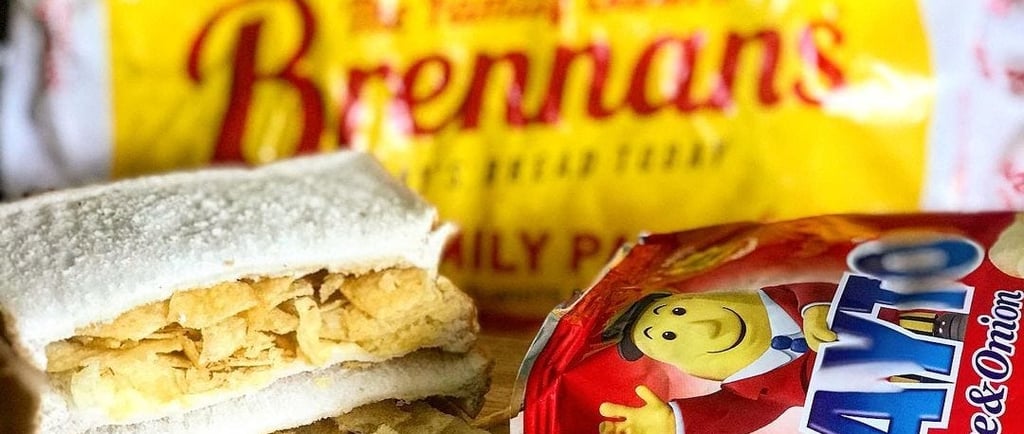
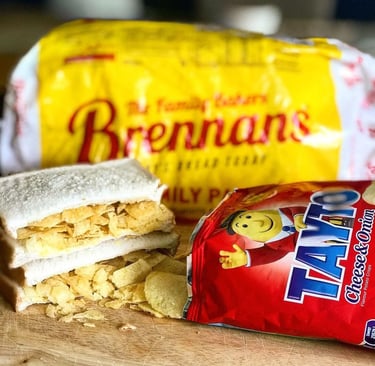
Looking back now, it’s slightly worrying how often a packet of Tayto between two slices of white bread counted as lunch.
But at the time it was perfection.
Soft Brennan’s bread, butter thick enough to leave teeth marks, and a packet of cheese and onion Tayto crushed in the middle. Culinary excellence in its purest Irish form.
The Punt Taught Us the Value of Money
I remember working as a young teenager in Roches Stores in The Square Shopping Centre in Tallaght, in the Levi department. It wasn’t glamorous work, but it taught me something important very quickly — the value of money.
The Irish Punt meant something then. Every pound mattered. You knew exactly what things cost because you’d worked for it.
A few shifts folding jeans and helping customers pick sizes, and suddenly a night out or a new pair of trainers felt earned.
It was a different time. Simpler in many ways.
The Phone Was Attached to the Wall
Before mobile phones, the house phone was the most dangerous object in the house.
If it rang, the whole room went quiet.
Because if someone answered it and said:
“Conor… it’s for you.”
You immediately started thinking:
What have I done now?
And if your parents picked it up first, you were already in trouble before you even knew why.
Sport Was Everything
For many of us, sport wasn’t something you watched. It was something you lived.
Hurling, football, kicking a ball against a wall for hours — it didn’t matter. If there was a game happening, you were part of it.
You’d play until it got dark. Then someone would shout:
“Last goal wins!”
And somehow that last goal would take another hour.
The Funny Thing About Those Years
At the time, most of us couldn’t wait to grow up. We wanted more money, more freedom, bigger things.
But looking back now, there was something special about those years.
There was a sense of community, a shared experience across the whole country. Whether you were in Dublin, Cork, Galway or Donegal, the stories were the same.
We didn’t realise it then, but those small everyday moments — the fields, the telly shows, the Tayto sandwiches, the Angelus bells — were quietly shaping what it meant to be Irish.
And no matter where life takes you afterwards, those memories stay with you.
Because the truth is simple.
You can take someone out of Ireland.
But you can never take Ireland out of them.
– Conor Dwyer
Gaelic Generations
Éire go Brách 🇮🇪
Gaelic Generations
Wear Your Heritage. Carry Your Story ☘️
Contact
Newsletter
support@gaelicgenerations.com
Gaelic Generations ©2026. All rights reserved
Business Location: 43 The Green, Rugby. CV22 7LZ
Independent Irish brand • Made-to-order products • Free tracked shipping • Customer support available.

