Hurling - The Irish Game That Never Leaves You
What is Hurling? A personal reflection on hurling, Irish identity, GAA tradition, and why Ireland’s ancient game still connects generations at home and abroad.
IRISH SPORT & GAA
Introduction
Dia daoibh, Conor here again from Gaelic Generations.
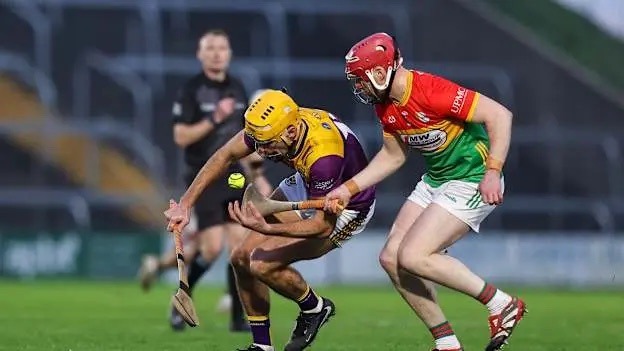
Hurling is a traditional Irish field sport played with a hurley and sliotar. Known as one of the fastest games on grass, it is one of Ireland’s oldest and most culturally important sports, deeply tied to GAA tradition, local identity, and Irish life at home and abroad.
If you’re Irish, or grew up anywhere near an Irish community, there are certain things that stay with you for life. The sound of a fiddle in the corner of a pub. The smell of a Sunday roast in the kitchen. And for many of us, the unmistakable crack of a hurley striking a sliotar.
For me, hurling has always been the greatest sport in the world. Not just because of the speed, the skill, or the history behind it, but because of what it represents. Hurling is more than a game. It is identity, community, memory, and tradition all rolled into one.
And like many Irish people living abroad today, it is also one of those things that connects us back to home, no matter where life takes us.
What Is Hurling?
For anyone new to it, hurling is a traditional Irish field sport played with a wooden stick called a hurley and a small ball called a sliotar. It is fast, physical, skilful, and proudly tied to Irish culture through the GAA.
It is often described as the fastest field sport in the world, and once you watch it properly, it is easy to see why. The speed of the ball, the reactions, the catching, striking, hand-passing, and sheer bravery involved make it one of the most impressive sports anywhere.
But for those of us who grew up around it, hurling is not only impressive. It is familiar. It is part of the rhythm of Irish life.
A Game Older Than Most Nations
Hurling is not just old — it is ancient.
The game has been played in Ireland for over 3,000 years, with references appearing in Irish mythology and in the stories of legends like Cú Chulainn, who was said to have mastered the game as a boy. Long before stadium lights, media coverage, and packed championship days, hurling was being played in fields, village greens, and rough patches of land across the country.
That is one of the extraordinary things about it. So much has changed in Ireland over the centuries, yet the essence of hurling has remained. Two teams. A hurley. A sliotar. Goalposts. Simple enough on the surface, but almost impossible to master.
What makes hurling so special is that it combines ancient tradition with unbelievable modern skill. You can watch a match today and still feel that link to something far older than most organised sports on earth.
Why Hurling Matters in Irish Life
To someone outside Ireland, hurling might first look like chaos. Fast movement. Hard collisions. A ball flying through the air at frightening speed. But once you understand it, you realise you are watching something much deeper than a sport.
Hurling matters because it is rooted in place. In parishes. In towns. In schools. In local clubs. It carries the pride of where you come from and the people you represent.
In Ireland, the local GAA club is often far more than a place to play. It is where friendships are made, where children learn discipline and belonging, where parents volunteer, where communities gather, and where generations overlap. Hurling sits right in the middle of that.
That is part of why the game leaves such a mark on people. Even if you stop playing, it never really leaves you.
The Amateur Spirit of the GAA
One of the most remarkable things about hurling and the GAA is that even at the very highest level, the players are amateurs.
The men lifting Liam MacCarthy, playing in front of packed crowds and millions watching from home and abroad, are not doing it for transfer fees or weekly wages. They are teachers, builders, electricians, farmers, office workers, students. They train like professionals, but they play for pride, parish, county, family, and love of the game.
That amateur spirit says a lot about Ireland. It says that some things still belong to the people. It says that excellence does not always need commercial gloss. It says that representing your place and your people still means something.
For me, that has always been one of the most powerful things about hurling. It keeps the sport grounded. It keeps it honest.
My Own Hurling Story
Like many lads growing up in Dublin, my own connection to hurling started early.
I played for my schools in Tallaght, first at junior level and then through secondary school, where the game quickly became part of everyday life. If you ever played hurling at school level in Ireland, you will know the feeling well — the cold mornings, the muddy pitches, the rivalries, the slagging, the nerves before throw-in, and the friendships formed along the way.
Outside school, I played for my local club, Thomas Davis GAA Club in Tallaght, a club with a proud tradition that has produced countless county-level players and given generations of young people a place to compete, belong, and grow.
I was lucky enough to win a number of medals over the years, and of course that means something. But if you ask most people who played the game, the medals are not usually the first thing they remember.
It is the moments.
The dressing room laughs.
The bus journeys to matches.
The talk before and after games.
The wet evenings training when nobody wanted to be there until the session started.
The matches played in wind and rain that felt like All-Ireland finals to the lads on the pitch.
Those are the memories that stay with you. That is the real mark of hurling. It becomes part of your story.
Croke Park: The Dream That Never Leaves You
For any young hurler, there is always one place sitting somewhere in the imagination.
Croke Park.
The home of the GAA in Dublin is one of the great stadiums in world sport. On big championship days, it becomes something else entirely. The county colours pouring into the stands. The flags. The noise. The tension before the throw-in. The roar when a goal goes in.
It is hard to explain the feeling of Croke Park properly unless you have been there for a major hurling match. There is history in the concrete, history in the noise, history in the way generations of Irish people have passed through those gates carrying the hopes of their club or county with them.
Watching an All-Ireland hurling final there is one of the great experiences in Irish sport. Even if you are not from a traditional hurling county, you can feel the weight of what it means.
And for Irish people abroad, it is often one of those images that hits hardest — the packed stands, the noise, the colours, the feeling of home condensed into one place.
Hurling Around the World
One of the most remarkable things about the GAA is how far it has travelled.
Wherever Irish people have gone, the games have followed. London. New York. Sydney. Toronto. Dubai. Across cities and communities all over the world, GAA clubs continue to keep hurling and Gaelic football alive for new generations.
That matters more than people sometimes realise.
For the Irish diaspora, a GAA club is rarely just about sport. It is about connection. It is about hearing familiar voices, meeting people who understand where you come from, and staying linked to a part of yourself that distance cannot erase.
A hurley in the hand.
A sliotar being struck.
A club jersey in another country.
It all means something.
It is not just nostalgia. It is continuity.
## Why Hurling Means So Much
To outsiders, hurling might look like just another sport.
To those of us who grew up with it, it represents something much deeper.
It represents the towns and villages where clubs are rooted.
It represents the generations who kept the game alive.
It represents schooldays, club matches, county rivalries, and community pride.
It represents a uniquely Irish tradition that has survived, adapted, and stayed relevant through centuries of change.
And perhaps most importantly, it represents belonging.
Whether you played at county level or just lined out for your local club on a wet Sunday morning, hurling leaves its mark. Once it becomes part of you, it tends to stay there.
The Game That Connects Generations
Like so many of the best things in Irish life, hurling connects generations. Fathers bring children to matches. Mothers stand on sidelines. Grandparents tell stories about games from decades ago. Young players pick up a hurley for the first time and become part of something that stretches back thousands of years.
That is why the game carries so much emotional weight. It is not just about what happens on the pitch. It is about what gets passed on. Stories. Rituals. Pride. Memory. Identity. For those of us who have moved away from Ireland, that connection can become even more meaningful.
Because wherever we are in the world, the sound of a sliotar striking a hurley has a way of bringing us back.
Hurling, Heritage, and Home
At Gaelic Generations, I am always drawn to the parts of Irish life that stay with us. The traditions, phrases, memories, and symbols we carry long after we leave a place. Hurling belongs firmly in that category.
It is part of who we are. Not for every single Irish person in exactly the same way, of course, but deeply enough that it holds a place in our cultural memory. It says something about where we come from and what we value — community, pride, resilience, and connection.
That is why it deserves to be written about, remembered, and celebrated.
If hurling was part of your story too, then you will understand exactly what I mean.
Slán go fóill,
Conor Dwyer
Founder, Gaelic Generations
Go raibh maith agat for reading
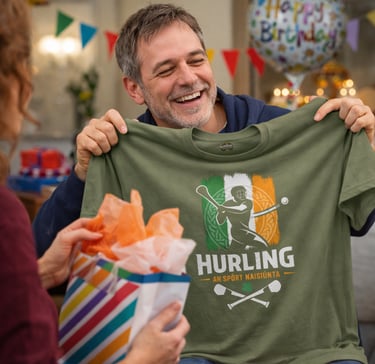
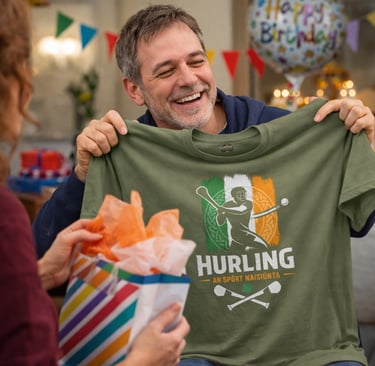
Hurling – Ireland’s National Game | Irish Heritage T-Shirt
Inspired by the Ancient Sport of Ireland
Gaelic Generations
Wear Your Heritage. Carry Your Story ☘️
Contact
Newsletter
support@gaelicgenerations.com
Gaelic Generations ©2026. All rights reserved
Business Location: 43 The Green, Rugby. CV22 7LZ
Independent Irish brand • Made-to-order products • Free tracked shipping • Customer support available.

