free shipping
Irish Blessings: The Words We Once Ignored That Now Mean Everything
Irish blessings once felt like background noise growing up, but with time they reveal deeper meaning—love, protection, and the quiet wisdom at the heart of Irish culture.
Conor Dwyer
3/20/20264 min read
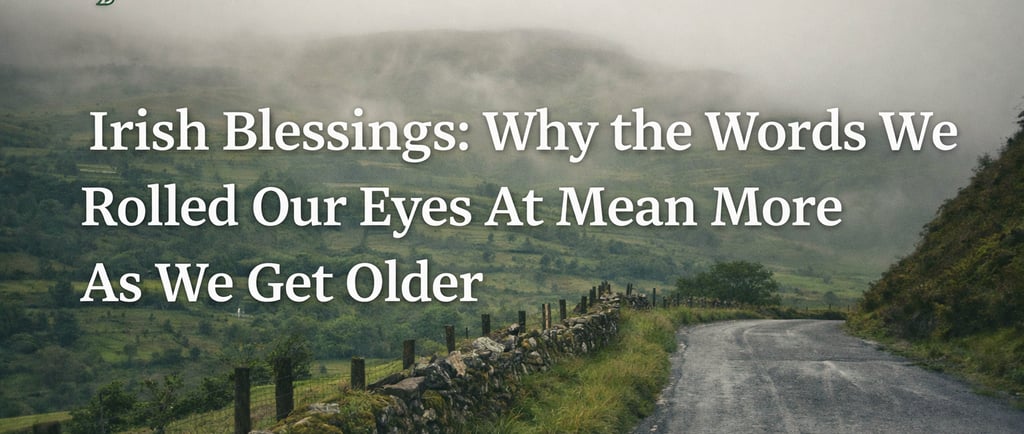
When you’re young, Irish blessings can feel like one of those things that just follows you around.
They’re on cards. In kitchens. At weddings. In speeches you want to end five minutes sooner. They appear just as someone is putting on a coat to leave, or right before an older relative decides they’re about to say something important and everyone else has to stop what they’re doing and listen.
And if you grew up around them, there’s a fair chance you barely listened at all.
When we’re younger, a lot of that kind of thing feels like background noise. You hear it, but you don’t really hear it. It sits in the same part of your brain as holy pictures on the wall, the good room nobody sat in, or the phrases your parents and grandparents said so often you stopped questioning them. They were just there. Part of the furniture. Part of being Irish. At that age, blessings can feel a bit dramatic. A bit old-fashioned. Maybe even a bit annoying.
But then life does what life does.
You get older. You lose people. You move away. You miss places you once couldn’t wait to leave. You start seeing your parents in yourself. You hear a phrase you used to laugh at, and suddenly it lands differently. Not because the words changed, but because you did.
That’s when Irish blessings stop sounding like performance and start sounding like truth.
Because the thing about Irish blessings is this: they were never really just words.
They were care.
That’s what sits underneath them. Care, wrapped in poetry. Love, dressed up in rhythm and memory. A way of saying, “I want good things for you” without making a big show of it. The Irish have always had a way of speaking around things as much as directly at them, and blessings sit right in the middle of that tradition.
They’re gentle, but they carry weight.
Take something like, “May the road rise to meet you.”
As children, it can sound odd. What road? Why is it rising? Why can nobody in this country ever just say goodbye normally?
But the older you get, the more you understand exactly what it means. It’s not about roads at all, not really. It’s about hoping life meets you with a bit of kindness. It’s about wishing someone a smoother journey, lighter burdens, better luck than maybe this world usually hands out.
And that’s deeply Irish.
We come from a culture shaped by hardship, faith, humour, loss, family, emigration, and endurance. We are a people who learned how to keep going, and part of that survival was language. Not just talking for the sake of it, but saying things that held people together.
That’s why blessings matter in Irish culture. They aren’t decorative. They’re emotional inheritance.
Long before people talked about mindfulness, affirmations, or speaking intention into your life, Irish people were doing it in their own way. Around tables. At funerals. Before journeys. At christenings. At weddings. In letters. In farewells. In the half-sacred, half-ordinary moments that make up family life.
Blessings were never separate from life. They were woven into it.
And maybe that’s why they hit harder as we get older.
Because eventually, you realise the people saying those words weren’t trying to sound wise. They were trying to protect you in the only way they knew how. They were placing something good around you. A hope. A prayer. A wish. A small verbal hand on the shoulder.
That means more once you’ve seen enough of life to know that nobody gets through it untouched.
There’s also something else Irish blessings carry that doesn’t get talked about enough: connection.
For Irish people at home and abroad, these phrases are more than old lines on souvenirs or pub signs. They are tiny pieces of continuity. Little cultural threads that tie us back to our families, our elders, and the version of Ireland that lives in memory as much as geography.
For the Irish abroad especially, blessings can hit with a different kind of force.
When you’ve built a life in England, America, Australia, or anywhere else far from home, certain words suddenly become anchors. They remind you of who said them, where you heard them, and what kind of world you came from. They hold the sound of home in them.
That is the real power of Irish blessings.
They carry tenderness without making a fuss about it.
They let people say love, fear, hope, and faith without putting all of it on the table at once.
They remind us that in Irish culture, words matter. Not in a polished, perfect way. In a lived way. In a passed-down way. In the kind of way that survives because people keep saying them.
So yes, when we were younger, plenty of us rolled our eyes.
We thought it was all a bit much. A bit too slow. A bit too solemn. A bit too familiar.
But now?
Now we understand.
Now we know those blessings were never there to impress us. They were there to steady us. To send us out into the world with something decent at our backs. To give shape to love in a culture that often said the deepest things sideways.
And maybe that’s why they stay with us.
Because the older we get, the more we realise that the words we once dismissed as old Irish stuff were actually carrying the very things we spend half our lives searching for: comfort, belonging, faith, and the feeling that someone, somewhere, is wishing you well.
In the end, that’s what an Irish blessing really is.
Not just a phrase.
A way of holding people, even as they go.
Slán go fóill,
Conor Dwyer
Founder, Gaelic Generations
Whether it’s a blessing, a phrase, or a memory…
it’s all part of the same thing.
Holding onto where you come from.
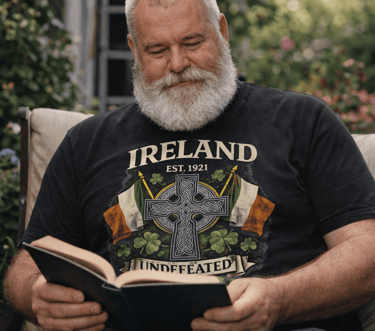
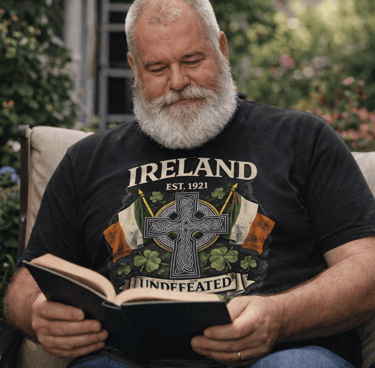
Wear the meaning, not just the words.
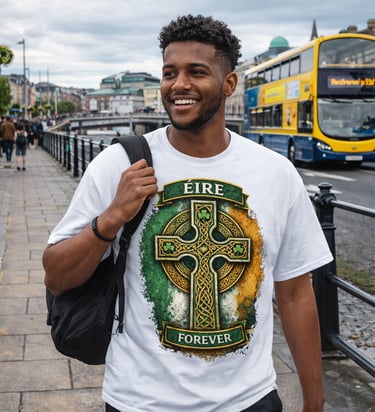
Shop Irish Heritage Tees →
Gaelic Generations
Wear Your Heritage. Carry Your Story.
Celebrating Irish identity across generations worldwide ☘️
Contact
Newsletter
support@gaelicgenerations.com
© 2026. All rights reserved
Privacy Policy
Return & Refund Policy
Contact Us
About Us
Business Location: 43 The Green, Rugby. CV22 7LZ