Irish Culture Isn’t Having a Moment… It’s Being Recognised
Irish culture isn’t having a moment—it’s being recognised. Discover why the so-called “Green Wave” reflects identity, storytelling, and connection that has always been there.
IRISH HERITAGE & DIASPORA

Introduction
A chara, Conas atá tú?
Every so often, you’ll hear someone say that Irish culture is “having a moment.” It shows up in headlines, in conversations, and in the way people talk about actors, musicians, and writers who suddenly seem to be everywhere. There’s even a name for it now — the “Green Wave.” But if you’re Irish, or you’ve grown up around Irish people, it doesn’t feel like anything new has arrived. If anything, it feels like something that’s always been there is finally being noticed properly. Because Irish culture didn’t just appear in the last few years, it hasn’t suddenly become more interesting or more meaningful.
What’s changed?
For a long time, Ireland was presented to the world in a very particular way. It was the land of poets, playwrights, and literary greats. That image still matters, and it’s something to be proud of, but it only ever told part of the story. The Ireland most of us recognise isn’t just found in books or on stages. It’s in kitchens, in conversations, in the way people talk to each other without needing to explain too much. It’s in the habits, the humour, and the small moments that don’t look like much from the outside but carry a lot underneath.
That’s the version of Irish culture people are starting to see more clearly now. What’s being called the “Green Wave” is really just the latest expression of something that has always existed. Irish voices are reaching wider audiences through film, music, television, and literature, but the reason they’re resonating isn’t complicated.
It comes down to storytelling.
Irish people have always had a way of telling stories that feel real. Not overly polished, not forced, and not trying too hard to impress. There’s a natural honesty to it, and that honesty travels. It crosses borders and connects with people who may never have set foot in Ireland but still recognise something familiar in the way those stories are told.
Part of that connection also comes from the sheer scale of the Irish diaspora. Millions of people around the world have Irish roots, and with that comes an existing connection to Irish identity. But even beyond that, there’s something more universal at play.
Irish culture tends to speak to people who feel slightly between places — those who understand what it means to belong somewhere, even when you’re not physically there. It carries a sense of memory, of movement, and of holding onto something that doesn’t always need to be explained.
That’s why it resonates as strongly as it does.
Ireland has always been a country shaped by leaving and returning. People didn’t just carry their belongings with them when they left; they carried their way of speaking, their humour, their outlook on life, and their stories. Over time, those things didn’t disappear. They adapted, they settled into new places, and they became part of a wider global identity that still feels distinctly Irish.
So when people talk about Irish culture becoming more visible, what they’re really seeing is that shared identity coming to the surface again.
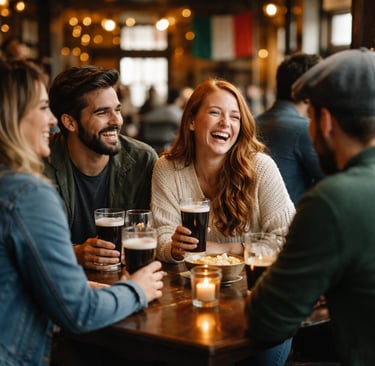
At the centre of all of this is something simple: storytelling that feels lived rather than performed. It’s not about grand statements or carefully constructed narratives. It’s about the kind of communication that happens naturally — around tables, in passing comments, in small exchanges that stay with you longer than you expect.
That has always been part of Irish life.
And perhaps that’s why Irish culture feels so relevant right now. People are drawn to things that feel genuine, especially in a world where so much can feel overly produced or disconnected. Irish culture offers something different. It feels grounded, familiar, and rooted in real experience.
So while people may call it a trend or a wave, it doesn’t quite fit that description.
It’s not something new rising up.
It’s something that has always existed, now being recognised for what it is. And for those who are Irish, or connected to Ireland in any way, it’s never really been something you had to go searching for. It was always there, quietly shaping the way you see the world.
As always, slán go fóill,
Conor Dwyer
Founder, Gaelic Generations
Whether it’s a trend, a cultural phenomenon, or a myth…
it’s all part of the Irish diaspora DNA.
Gaelic Generations
Wear Your Heritage. Carry Your Story ☘️
Contact
Newsletter
support@gaelicgenerations.com
Gaelic Generations ©2026. All rights reserved
Business Location: 43 The Green, Rugby. CV22 7LZ
Independent Irish brand • Made-to-order products • Free tracked shipping • Customer support available.

